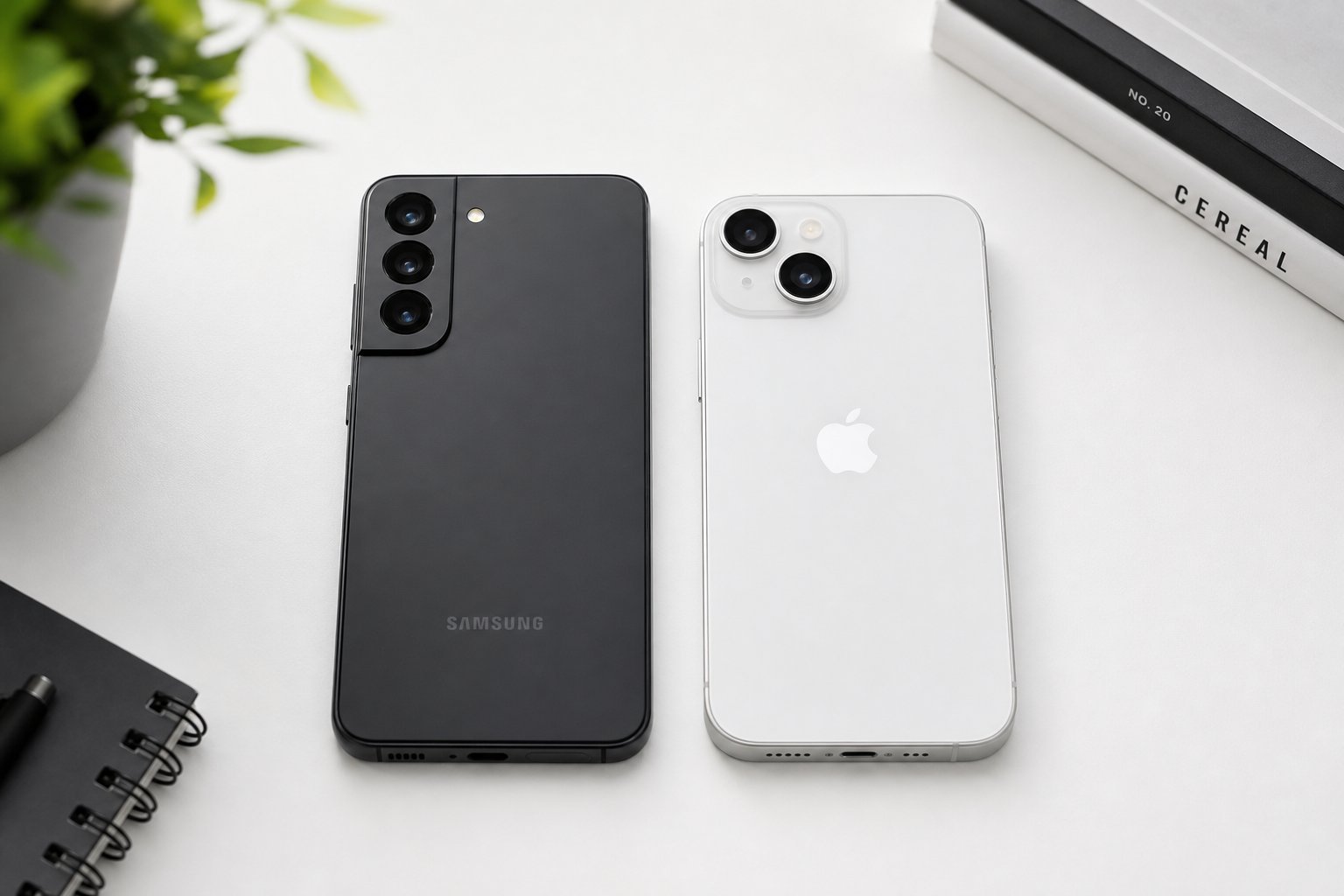
It's one of the oldest arguments in tech, and it usually ends with everyone more defensive than informed. Android fans insist their phones are more customizable; iPhone fans swear theirs just "work." But if you're genuinely trying to decide which to buy, slogans don't help. You need a clear, bias-free comparison of what each platform actually offers.
Here's the honest headline: there is no universal "best." There's only what's best for you — and that depends on how you use your phone, what you value, and what other devices you own. This guide lays out the real differences so you can decide with confidence.
What we'll compare
Ecosystem: what other devices you own Customization & control Price & choice Longevity & updates Privacy & security Cameras Which should you pick?Ecosystem: what other devices you own
For most people, this is the single biggest deciding factor — and it's the one that's easiest to overlook. Your phone doesn't exist in a vacuum; it works best with other devices from the same family.
If you already own an iPhone, iPad, Mac, Apple Watch or AirPods, an iPhone will integrate with them seamlessly. Features like AirDrop (instantly sharing files between Apple devices), Handoff (starting an email on your phone and finishing on your Mac), and iMessage syncing across devices just work. Buy an iPhone and all your Apple gear gets along.
If you use Windows PCs, Google services (Gmail, Google Photos, Google Drive) or Chromebooks, Android tends to integrate more smoothly. Files, photos and documents sync easily with Google's ecosystem, and many Android phones pair nicely with Windows via built-in tools. Some Android phones can even plug into a monitor and act like a desktop computer.
💡 The ecosystem test
Ask yourself: "Which platform is the rest of my digital life built on?" If it's Apple, get an iPhone. If it's Google/Windows, Android will fit more naturally. Going against your existing ecosystem means fighting friction every day.
Customization & control
This is the classic divide. Android is the open platform; iOS is the walled garden.
Android gives you far more control. You can change your launcher (the whole home-screen experience), install apps from outside the official store (sideloading), customize almost every element of the interface, and even replace default apps like the browser and keyboard. Power users love this freedom.
iOS is more consistent and polished, but you get less control. What you see is largely what Apple gives you. You can't replace the default browser or install apps from outside the App Store (unless you jump through technical hoops). For many people, this "less to fiddle with" is a feature, not a limitation — it means a smoother, more predictable experience.
| Aspect | Android | iPhone |
|---|---|---|
| Home screen customization | Extensive | Limited but improving |
| Install apps outside store | Yes | No |
| Change default apps | Yes | Limited |
| Interface consistency | Varies by brand | Very consistent |
Price & choice
If price is a big factor — and for most of us it is — Android has an enormous advantage in choice.
Android phones come in every price range, from budget models under $200 to folding flagship phones over $1,500. If you want a great phone without spending a fortune, Android is really your only option. There are excellent mid-range Androids that outperform entry-level iPhones at a fraction of the cost.
iPhones, by contrast, sit at the premium end of the market. Apple makes excellent phones, but if you're on a tight budget, the cheapest current iPhone is still a significant investment, and it competes with mid-range rather than budget Androids.
There's also the matter of choice within Android — Samsung, Google, OnePlus, Xiaomi, Motorola and others offer different designs, cameras and software. With Apple, you choose between a handful of iPhone models each year.
Longevity & updates
How long will your phone stay useful and secure? This matters more than most people think.
Apple is the clear leader here. iPhones typically receive software updates for 6–7 years or more after release. That means your phone gets new features and, crucially, security patches for years.
Android longevity has improved dramatically in recent years. Google's own Pixel phones now promise 7 years of updates, and Samsung offers 7 years for its flagship Galaxy phones. However, budget Android phones often receive far fewer years of updates, so it pays to check the promised update window before you buy.
If you plan to keep your phone for many years, prioritize update support. A phone that stops getting security updates becomes increasingly risky to use online.
⚠️ Check update promises
Before buying any Android phone, look up how many years of software and security updates the manufacturer promises. Cheap phones sometimes get only 1–2 years, which shortens their safe lifespan considerably.
Privacy & security
Neither platform is "hackable by default" — both are secure when used sensibly. But the philosophies differ.
Apple markets privacy as a core feature: end-to-end encryption on iMessages and FaceTime, on-device data processing where possible, and transparent app permission controls. If privacy is your top priority, Apple makes a strong, credible case.
Android's privacy depends on choices. Google offers strong security and privacy tools too, but Android is more open, which means it's the target of more malware, and it's easier for malicious apps to sneak in — especially if you sideload. The platform is also fragmented across brands, so security updates don't reach every device at the same speed.
The practical takeaway: both are safe if you use common sense — install apps from official stores, keep the phone updated, and don't click suspicious links. For maximum control, iPhones are generally considered the more locked-down option.
Cameras
Cameras are a top priority for most buyers, so it's worth a clear look. The good news: both platforms take excellent photos. The differences are in style and versatility, not a clear winner.
- iPhones are renowned for consistent, natural-looking, true-to-life photos and excellent video. You point, shoot, and get reliable, great results.
- Flagship Androids (especially Google Pixel, Samsung) often offer more zoom flexibility, more detailed sensors, and more manual control. Google's Pixel is famous for computational photography and superb low-light shots.
If photography and video matter a lot, research the specific models in your budget rather than the platform as a whole. Camera quality varies more between individual phone models than between iOS and Android.
Which should you pick?
Let's turn all of that into a simple decision guide:
✅ Choose an iPhone if…
You already use other Apple devices · you value consistency and a polished, worry-free experience · privacy is your top priority · you plan to keep your phone for many years · you mainly want a great point-and-shoot camera and excellent video.
✅ Choose Android if…
You're on a budget or want maximum phone choice · you want to customize and control your phone · you live in the Google/Windows ecosystem · you want the most phone for your money · you like flexibility in cameras, zoom and features.
Both platforms are excellent. The "right" answer is the one that fits your devices, budget and priorities. Decide based on those three things — ecosystem, budget and how much control you want — and you'll be happy with your choice. Everything else is marketing noise.