We use the internet every single day — to talk, shop, learn, work and connect. Yet if someone asked you to explain how it actually works, would you know what to say? Most people can't, and that's completely normal. The internet is a remarkably complex system, but its core idea is surprisingly simple.
This guide explains how the internet works in plain terms — no jargon, no math. Once you understand the basic idea, all the tech that runs on it starts to make a lot more sense.
What we'll cover
The internet is a network of networks Information travels in packets How computers find each other The journey of a web pageThe internet is a network of networks
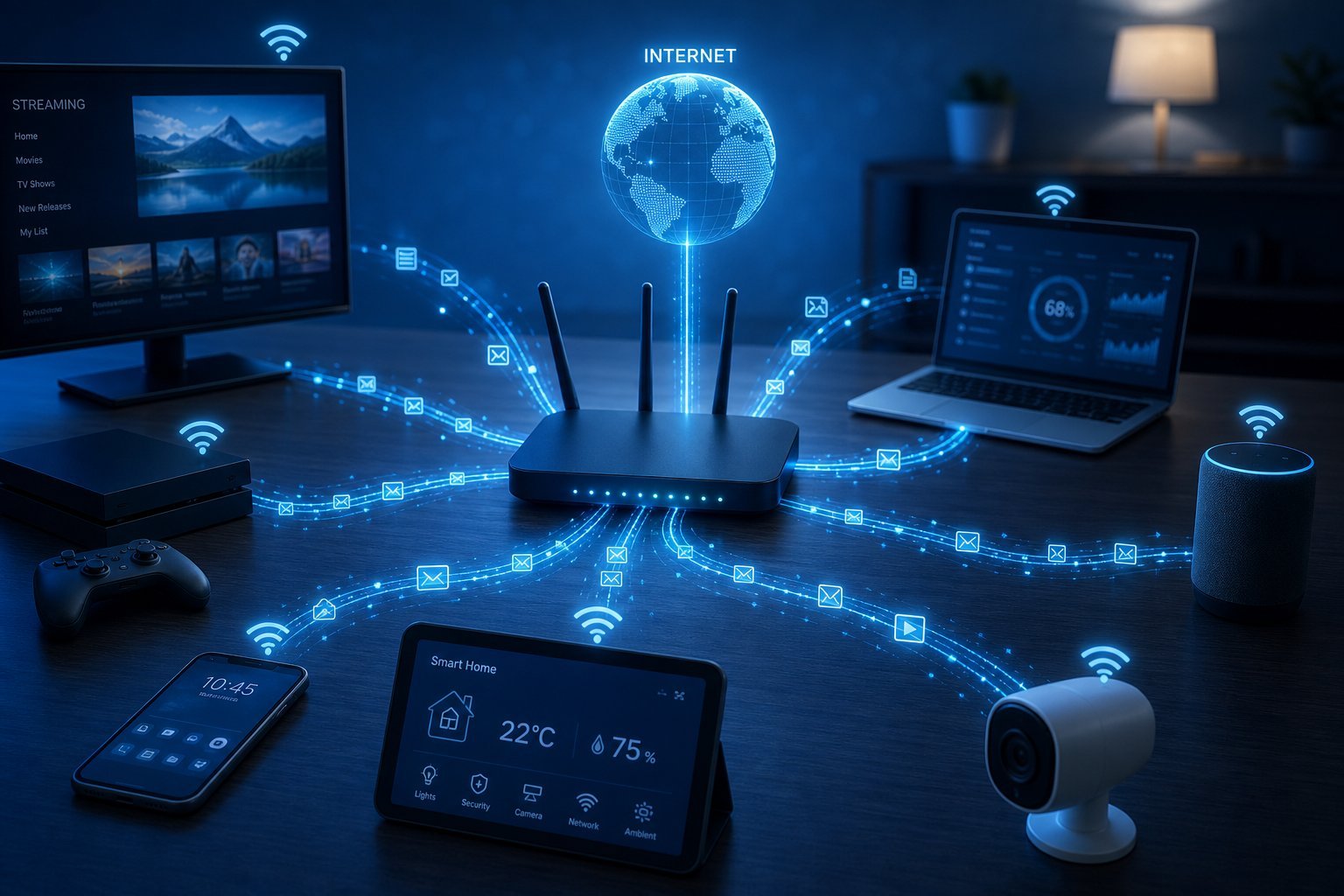
Here's the simplest way to understand the internet: it's a global network of computers, connected together. That's it — a web of connections that lets any computer talk to any other.
But it's not one giant network. It's actually a network of smaller networks — your home network, your workplace network, your internet provider's network, and millions of others, all linked together. When you connect, you're joining this massive web, and you can reach any other connected computer.
The key idea: no single company owns the whole internet. It's a cooperative system of networks that agree to connect to each other. That's why the internet is so resilient — if one path fails, data can travel another way.
Information travels in packets
Here's a key concept: when you send information over the internet, it isn't sent as one big piece. It's broken into small chunks called packets.
Think of it like sending a long letter. Instead of mailing one giant envelope, you split it into many small envelopes, number them, and send them on their way. They might take different routes to reach the destination, where they're reassembled in order.
Why packets? Breaking data into small pieces makes the network efficient, resilient (lost packets can be re-sent), and allows many users to share the same connections. Every email, photo, video and web page you send is actually a stream of small packets.
How computers find each other
For packets to reach the right place, computers need addresses — just like houses need street addresses. That's where the IP address comes in.
Every device connected to the internet has an IP address — a unique numeric identifier (like "192.168.1.1"). When you send data, it's addressed to the recipient's IP address, and the network routes the packets there.
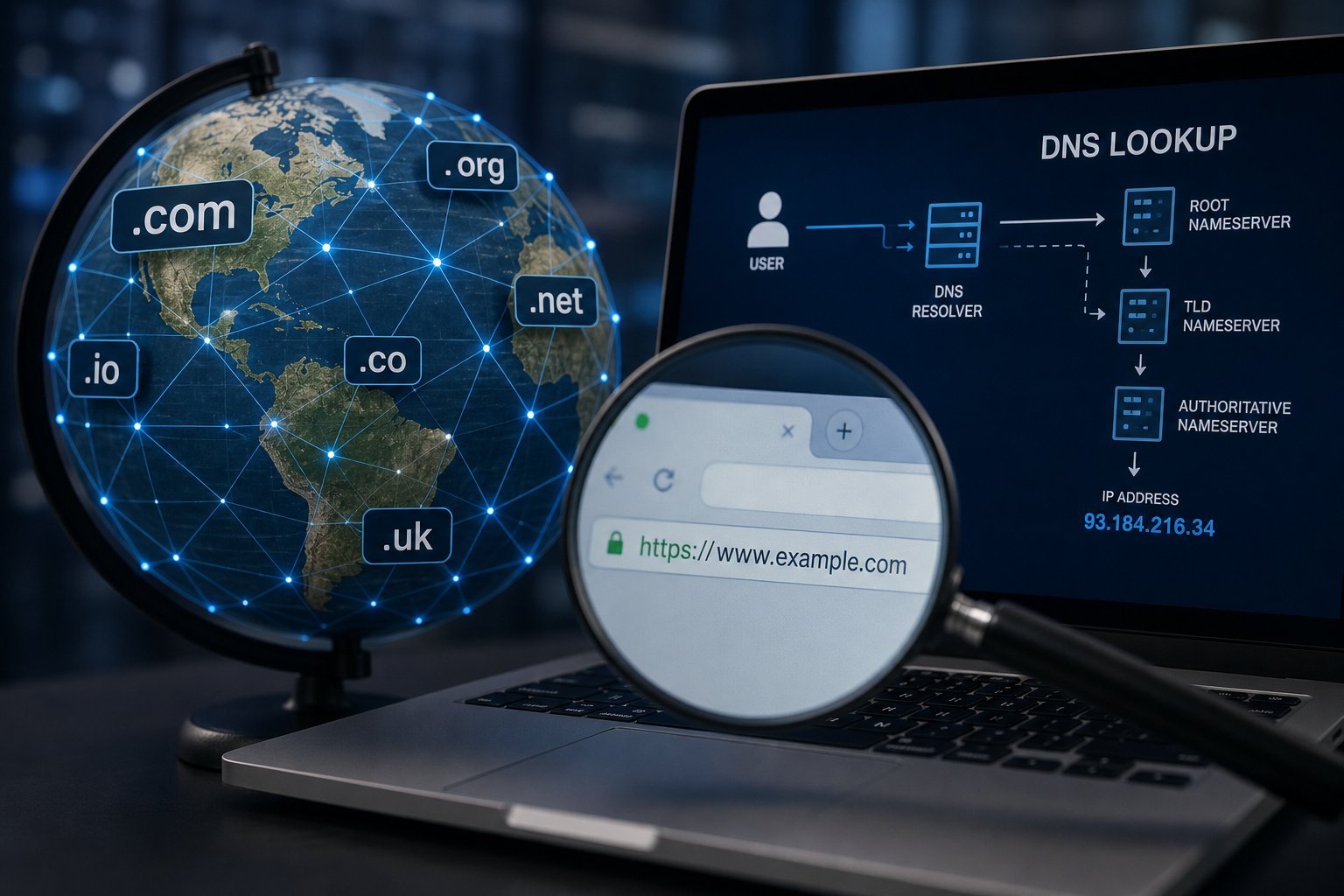
But here's the clever part you learned earlier (in our DNS guide): humans don't remember numeric IP addresses. So we use domain names like "hightechbee.com," and DNS translates those names into the numeric addresses the network uses. It's the address book that connects names to numbers.
💡 Two key parts
Two systems work together to route data: IP addresses (the numeric "street addresses" of devices) and DNS (the address book that turns human-friendly names into those numbers). Together they get your data to exactly the right computer.
The journey of a web page
Let's put it all together with a concrete example — what happens when you visit a website:
All of this happens in a fraction of a second. Every time you load a page, you're using DNS, IP addresses, packets, routing and servers — the internet's core systems, working together seamlessly.
📌 Bottom line
The internet is a global network of networks connecting computers worldwide. Information travels in small pieces called packets, addressed to devices via IP addresses, with DNS translating human-friendly names into numbers. When you visit a website, DNS finds the address, your request travels in packets across the network, and the server sends the page back to be reassembled — all in a blink. Understanding these basics makes everything else on the internet make sense.