Building a smart home means choosing smart devices — and there are a lot of them. From smart lights and plugs to cameras, thermostats and locks, the choices can feel overwhelming. But choosing smart devices comes down to a few principles that save money and frustration.
We've covered starting a smart home and specific devices; this guide gives you the principles for choosing any smart device.
Does it solve a real need?
The most important question before buying any smart device: does it solve a real need?
The best smart devices solve real problems you actually have. Don't buy gadgets for their own sake — the smartest smart home is the one that fixes real annoyances.
Check compatibility
Compatibility is the most common smart home mistake:
💡 The compatibility rule
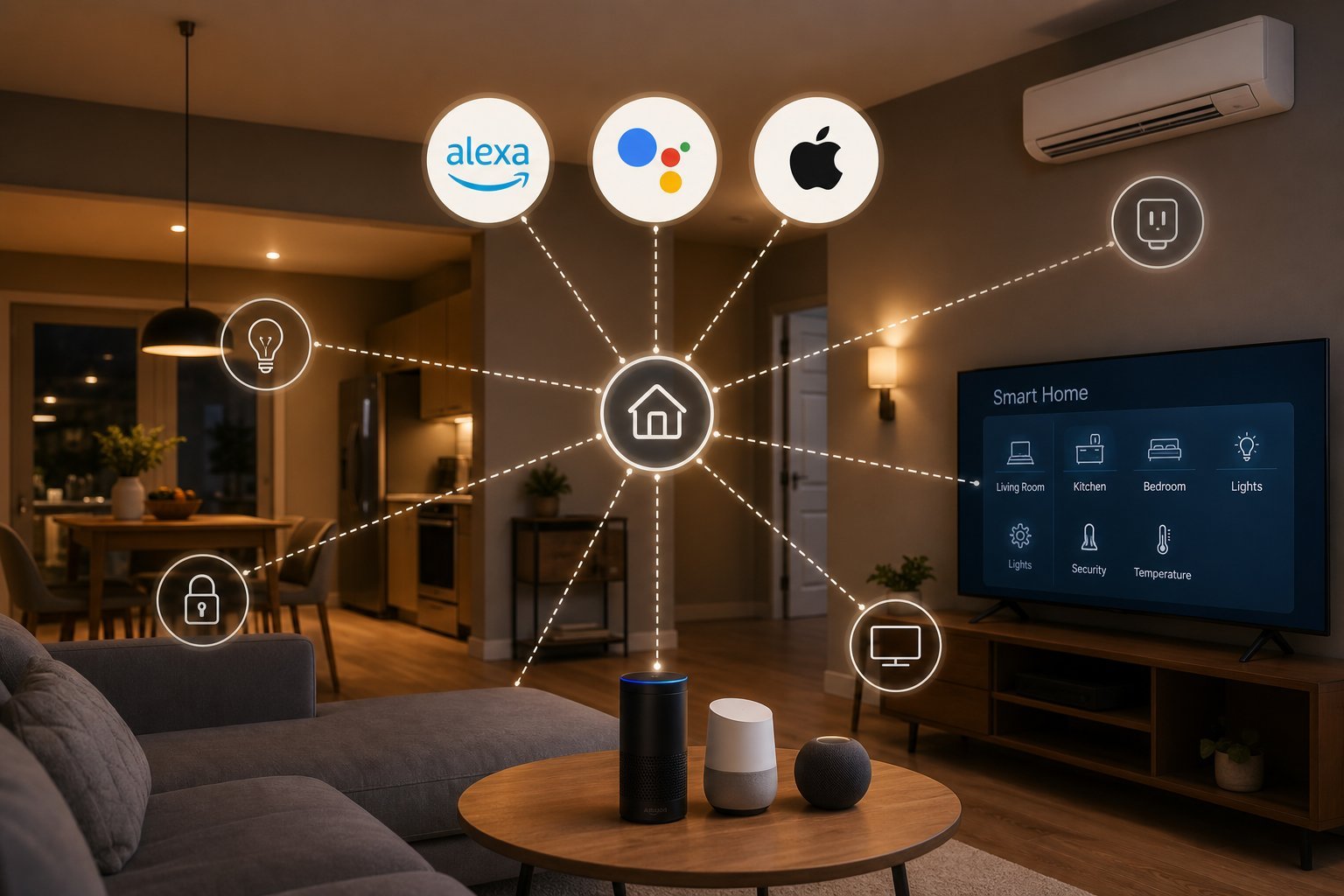
Before buying any smart device, check it's compatible with your ecosystem (Alexa, Google, Apple) and works with your network. Look for Matter compatibility to reduce lock-in. A device that doesn't work with your setup is a wasted purchase. Buying for compatibility avoids the most common smart home mistake.
Choose quality
Quality matters for smart devices, especially security-related ones:
✨ Start with one, expand from there
When choosing smart devices, start with one that solves a real problem (like a smart plug or light), check it works with your ecosystem, and expand from there (see our guide). Buying one quality device that fits your setup beats a bundle of incompatible gadgets. Grow your smart home deliberately.
📌 Bottom line
Choose smart devices by asking if they solve a real need — the best smart home fixes real problems, not gadgets for their own sake. Check compatibility with your ecosystem (and look for Matter), and choose quality, especially for security devices like cameras and locks. Start with one device that solves a problem, check it fits your setup, and expand from there. Buy deliberately, and your smart home will be useful, not a burden.